Question #1
Born to Sicilian immigrants in Little Italy New York City, Martin Scorsese would grow up to be one of the most influential and talked about Film Directors in modern history. Growing up the son of second generation immigrants in Little Italy has let Scorsese take the unique position to tell the perspective of being a third generation Italian American in New York City. Many of Scorsese's Films represent a internal view of Italian American experience in the ever changing United States. His parents were part of the first generation of children born in the US after the large Italian immigration that took place during the time frame of 1880's to the 1930's. With immigrating to New York city their families took up residence in the neighborhood of Little Italy on Elizabeth Street. One film that Scorsese made that depicts a representation of what life is like in Little Italy was ItalianAmerican (1974). In this Film Scorsese's makes a short Documentary of his parents life in New York. Many elements come through during this film, one element is the unique relationship that his parents share with each other. Many different structural aspects of the film show what their life was like. One part in particular is when Catherine, Martin's mother, goes into the kitchen to stir the Tomato sauce while she is talking and stirring Scorsese lets the sound of the living room creep into the background.(Clip 1) The noise that is coming from the living room is the voice and conversation that is taking place between the crew and Charles(Martin's Father) this bleed over sound subtly shows how small the living spaces were for families who lived in tenements that filled the New York neighborhoods. Staying with his choices to show how small and cramped life was Martin leads his parents to tell the story of what life was like when they were growing up. During the stories that were being told there were many cuts to old footage of the streets of New York while music Representative of their previous generations heritage.(Clip 2) Another aspect of Scorsese's story telling this film is his ability to show how the feelings his parents generations held of other cultures. By letting his parents banter back and forth about other bordering neighborhoods like Chinatown and and the idea that the Irish community was a culture that drank heavily. Charlie states that was dangerous to go into Chinatown but Catherine argues that it was safe to go there. Charlie also brings his opinion up about the Irish community that resided when they first moved into the tenements. He described that there were many bars but as the Italians moved in the bars started to dry up. During his whole conversation he takes a condescending tone towards these communities as if they were below the Italian standard and Italian immigrants were already assimilated into white American culture. Another conflict that Scorsese brings up is the inter generational conflict between the second and third generation Italians. While talking with his parents Charlie says that it was different then than it is now and this is also brought up in Donna Gabaccia's book "Historians have tended to accept immigrant parents complaints about the children, emphasizing inter generational conflicts that resulted in large part from children's new and individualistic ideals."(101) These elements that Scorsese brought into ItalianAmerican have made into many of his films through out his long and illustrious career.
Another director that shares the same passion about Film making as Martin Scorsese is the director Spike Lee. Lee another New Yorker that uses his experiences growing up in a minority group in the Bedford-Stuyvesant neighborhood to tell his stories works. the background that Lee draws on stems from a long history of African Americans in the United States. Spike's parents Bill Lee and Jacquelyn Shelton Lee lived in Atlanta,Georgia during the 1950's but shortly after Spike's birth the family moved Chicago in attempts to find work. After a short stay in Chicago Bill picked up the family and moved them to Brooklyn,New York. This movement north took place during the time of one of the greatest mass migrations to take place within the United States. The author of the Southern Diaspora noted that "In 1970,one third (34 percent)of all African American adults born in the Southern living elsewhere"(17) The culture that had developed as result of this migration in New York affected Spike in way that would come through in large number of his movies. In Lee's movie Do the Right Thing many of the the aspects of Spikes neighborhood were shown. One such aspect that came through was when Lee used the back drop of a pizzeria to tell the story of racial tensions that took place in many neighborhoods especially Bedford-Stuyvesant. This tension was shown to the fullest extent when Lee had all the characters talk to the camera and give all the slurs that they could come up with for another race other than there own.(Clip 3) In raising these powerful words into question Lee brought a subject of racism that is a mainstay in American culture. Another tension that was brought out was the tension between generations. Through out the whole movie Sal a second generation Italian American and Mookie an African American squared offed and traded wits and displayed the actions and thoughts that take place between old and young, black and white.(Clip 4) At the time of the movies release many people felt it was going to bring about riots and mayhem when it was viewed. Critically the movie was trashed and many said hat it was going to flop on the box office. Lee felt that his work had been unfairly criticized and in response Lee was quoted as saying " They wouldn't do that shit to Woody Allen."(125) This backlash that Lee faced from many is something that would follow him through out his career but it was something that wouldn't change the ideas and issues that Lee addresses in his work.
Works Cited
Gregory, James N, The Southern Diaspora, The University of North Carolina Press, 2005 (17)
Gabaccia, Donna, From Sicily to Elizabeth Street, State University of New York Press, 1984 (101)
Aftab, Kallem, Spike Lee That's My Story and I'm Sticking To It,W.W. Norton and Company 2006 (125)

Clip 1

First person Perspectives That Scorsese incorporated into Gangs ofNew York
Clip 2
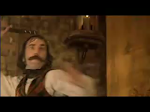
In this frame The frame rate is slowed downed then speed up to accentuate the emotion of the moment
Clip 3

Here is Charlie Looking Down at Diane
Clip 4

Sal and Pino Discuss the shop and Pino's Anger issues
Clip 5

The Scene where the Multicultural Neighborhood lays out all the deragotory names it can think of
No comments:
Post a Comment